Understanding Medical Billing Codes: Your Essential Guide
understanding medical billing codes

Understanding Medical Billing Codes: Your Essential Guide

Unlock the secrets of medical bills and empower yourself to confidently manage your healthcare expenses and claims.

Demystify Your Bill

Key Takeaways

  • ✓ Medical billing codes translate diagnoses and procedures into standardized language.
  • ✓ CPT, ICD-10, and HCPCS are the three primary code sets used in the US.
  • ✓ Understanding these codes helps patients verify services and spot errors.
  • ✓ Incorrect coding can lead to denied claims or unexpected out-of-pocket costs.

How It Works

1
Provider Documents Care

During your visit, the healthcare provider documents all diagnoses, procedures, and services rendered. This clinical documentation forms the basis for coding.

2
Coder Translates Services

A professional medical coder reviews the documentation and assigns specific alphanumeric codes. These codes accurately represent the services provided and medical necessity.

3
Claim Submitted to Insurer

The coded information is then compiled into a medical claim, which is electronically submitted to your health insurance company. This claim requests payment for the services.

4
Insurer Processes & Pays

Your insurer processes the claim, determining coverage based on your plan and the codes submitted. They then pay their portion, and you receive an Explanation of Benefits (EOB) and potentially a bill.

The Foundation: Why Medical Billing Codes Exist

Cutout paper composition of male with magnifier received expensive taxes and payments on blue background Photo: Monstera Production / Pexels
In the complex ecosystem of healthcare, medical billing codes serve as the universal language that translates intricate medical diagnoses, procedures, and services into a standardized, digestible format for insurance companies, government agencies, and healthcare providers. Imagine a world without these codes: every doctor's office would describe a simple strep throat or an appendectomy in their own unique way, making it impossible for insurers to process claims consistently, track public health trends, or even compare healthcare costs across different providers. This standardization is crucial for efficiency, accuracy, and fairness within the US healthcare system. Without it, the administrative burden would be astronomical, leading to even higher costs and greater delays in care. At its core, the purpose of medical billing codes is multifaceted. Firstly, they facilitate billing and reimbursement. When a healthcare provider renders a service, they don't just send a bill saying 'doctor's visit.' Instead, they use specific codes to describe exactly what happened: the diagnosis, the treatment, the type of visit, and any supplies used. This allows insurance companies to quickly understand the services provided and determine coverage based on the patient's policy. Secondly, these codes are vital for data collection and analysis. Public health organizations, researchers, and government bodies use aggregated coding data to track disease prevalence, evaluate treatment effectiveness, manage epidemics, and allocate resources. For instance, the Centers for Disease Control and Prevention (CDC) relies heavily on coded data to monitor health trends and inform public health policy. Thirdly, codes contribute to quality control and performance measurement. By analyzing coded data, healthcare systems can identify best practices, assess the quality of care, and even benchmark their performance against national standards. This helps drive improvements in patient outcomes and operational efficiency. Furthermore, medical billing codes play a significant role in medical necessity. Insurance companies often require that services be 'medically necessary' to be covered. The codes submitted on a claim directly communicate this necessity. For example, if a patient undergoes an MRI, the diagnosis code (ICD-10) must justify the procedure code (CPT). If the codes don't align – for instance, an MRI of the brain billed for a sprained ankle – the claim will likely be denied. This system, while sometimes frustrating for patients, is designed to prevent fraud, waste, and abuse, ensuring that healthcare resources are used appropriately. Understanding this foundational role is the first step in demystifying your medical bills and becoming a more informed healthcare consumer. It empowers you to question charges, verify services, and ensure you're only paying for what was truly necessary and provided. The journey into understanding medical billing codes begins with appreciating their indispensable function in the intricate dance between providers, patients, and payers.

Decoding the Alphabets: CPT, ICD-10, and HCPCS Explained

Detailed close-up of embossed anatomy diagrams on an open braille book page. Photo: Yan Krukau / Pexels
Navigating the world of medical billing codes requires familiarity with three primary alphabets: CPT, ICD-10, and HCPCS. Each serves a distinct purpose, working in concert to paint a comprehensive picture of a patient's medical encounter. Understanding these individual roles is paramount to truly grasping the nuances of your medical bills and insurance claims. **CPT Codes (Current Procedural Terminology):** Developed and maintained by the American Medical Association (AMA), CPT codes are five-digit numeric codes primarily used to describe medical, surgical, and diagnostic services and procedures. Think of CPT codes as defining 'what was done' during your visit. These codes are incredibly detailed, covering everything from a routine office visit (e.g., 99203 for a new patient, moderate complexity) to complex surgical operations (e.g., 29881 for arthroscopy, knee, surgical; with meniscectomy). There are tens of thousands of CPT codes, organized into categories like Evaluation and Management (E/M), Anesthesia, Surgery, Radiology, Pathology and Laboratory, and Medicine. Modifiers, which are two-digit numeric or alphanumeric codes, can be appended to CPT codes to provide additional information about the procedure, such as which side of the body was treated (e.g., -RT for right side, -LT for left side) or if multiple procedures were performed. These modifiers are crucial because they can significantly impact how a service is reimbursed by an insurer. For instance, a CPT code for a procedure might be identical, but a modifier indicating it was a distinct procedural service by the same physician on the same day could alter payment. **ICD-10 Codes (International Classification of Diseases, 10th Revision):** In contrast to CPT codes, ICD-10 codes answer the question 'what was wrong' or 'why was this service needed.' These alphanumeric codes, maintained by the World Health Organization (WHO) and adapted for the US by the Centers for Medicare & Medicaid Services (CMS) into ICD-10-CM (Clinical Modification), describe diagnoses, symptoms, and causes of injury or disease. Since October 1, 2015, the US healthcare system transitioned from ICD-9 to the significantly more granular ICD-10. ICD-10 codes are typically 3 to 7 characters long, with the first three characters indicating the category of disease, and subsequent characters providing increasing levels of specificity. For example, I10 represents 'Essential (primary) hypertension,' while I10.0 might specify a particular type or stage. The increased detail in ICD-10 allows for more precise tracking of health conditions, better epidemiological data, and more accurate claims processing. An ICD-10 code always accompanies a CPT code on a claim, establishing the medical necessity for the performed procedure or service. Without a justifying diagnosis code, an otherwise valid procedure code may be denied. **HCPCS Codes (Healthcare Common Procedure Coding System):** HCPCS (pronounced 'hick-picks') is divided into two main levels. Level I is essentially the CPT code set, which we've already discussed. Level II HCPCS codes, however, are alphanumeric codes primarily used to describe products, supplies, and services not covered by CPT codes. Think of these as codes for 'what was used or supplied' that isn't a direct medical procedure. This includes durable medical equipment (DME) like wheelchairs, crutches, and oxygen tanks; ambulance services; prosthetic devices; and certain drugs, particularly those administered in an outpatient setting or by a physician. For example, a code like A0428 might be for an ambulance trip, while E0424 could be for a stationary oxygen concentrator. These codes are maintained by CMS and are critical for billing items that fall outside the traditional scope of physician services but are still essential components of patient care. Understanding the interplay between CPT, ICD-10, and HCPCS is key to fully comprehending the information presented on your Explanation of Benefits (EOB) and any subsequent medical bills.

Navigating Your Medical Bill and Explanation of Benefits (EOB)
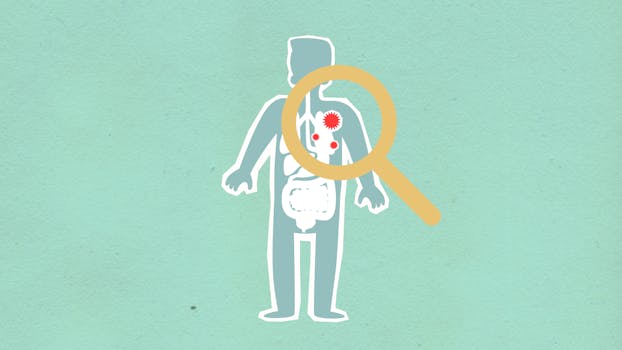
Paper cutout of man under magnifying glass with red viruses spreading on internal organs on green background during disease propagation Photo: Monstera Production / Pexels
Receiving a medical bill can often feel like deciphering an ancient script. However, with a basic understanding of medical billing codes and the structure of these documents, you can transform confusion into clarity. The two most important documents you'll encounter are your Explanation of Benefits (EOB) from your insurance company and the actual bill from your healthcare provider. While they serve different purposes, both provide crucial information that, when cross-referenced, can help you understand and verify charges. **The Explanation of Benefits (EOB):** This document is sent by your insurance company, not the provider, and it's not a bill. Instead, it's a detailed summary of what services your provider billed, what your insurance covered, and what amount you may still owe. Key sections to look for on your EOB include: * **Provider Information:** Name of the doctor or facility that provided the service. * **Date of Service:** When the service or procedure took place. * **Service Description:** A brief, often generic, description of the service. * **CPT/HCPCS Code:** The procedural or supply code submitted by the provider. This is your first crucial point of reference. * **Diagnosis Code (ICD-10):** The reason for the service. This code should align with the CPT code and your actual diagnosis. * **Billed Amount:** The total amount the provider charged for the service. * **Allowed Amount:** The maximum amount your insurance company will pay for a covered service. This is often a negotiated rate, which can be significantly lower than the billed amount. * **Patient Responsibility:** This section details your deductible, copayment, coinsurance, and any non-covered charges. This is the amount you are expected to pay. * **Reason Code/Remarks:** This is extremely important. If a claim was denied or adjusted, there will be a code or brief explanation here detailing why. Common reasons include 'service not covered,' 'deductible not met,' or 'duplicate service.' **Your Medical Bill:** This is the actual invoice from your provider, detailing the services you received and the amount you owe. While it may look different from your EOB, it should ideally mirror the 'Patient Responsibility' section of your EOB. Look for: * **Itemized List of Services:** Each service should be listed with a date, description, and usually a CPT/HCPCS code and charge. * **Diagnosis Codes:** These should be present and align with the services rendered. * **Total Charges:** The sum of all services. * **Payments/Adjustments:** Any payments made by your insurance or adjustments applied (e.g., discounts). * **Amount Due:** The final amount you need to pay. **Cross-Referencing and Verifying:** The power of understanding medical billing codes truly comes alive when you compare your EOB with your medical bill. Do the dates of service match? Do the CPT and ICD-10 codes on both documents correspond to the services you actually received and the diagnosis you were given? Are there any services on the bill that aren't on the EOB, or vice-versa? If you see discrepancies, such as being billed for a service you didn't receive, or if the diagnosis code doesn't make sense for the procedure, it's time to act. Don't pay a bill until you've thoroughly reviewed your EOB and the provider's bill. This proactive approach can help you identify errors, prevent overpayment, and ensure accurate claims processing. Remember, you have the right to request an itemized bill from your provider, which should list every service and corresponding code. This transparency is crucial for effective healthcare advocacy.

Common Pitfalls and How to Advocate for Yourself

Young black woman in a red shirt with a confused expression. Perfect for emotive stock photo needs. Photo: Anna Shvets / Pexels
Even with a good grasp of medical billing codes, the system can still present challenges. Being aware of common pitfalls and knowing how to advocate for yourself can save you significant time, money, and stress. The healthcare billing landscape is notorious for its complexity, and while most errors are unintentional, some can be costly. Proactive engagement is your best defense. **Common Pitfalls:** * **Coding Errors:** This is perhaps the most frequent issue. A coder might accidentally use the wrong CPT or ICD-10 code, leading to a denied claim or an incorrect charge. For example, billing for a complex visit (higher CPT code) when a simple one occurred, or using a diagnosis code that doesn't justify the procedure. * **Upcoding:** This is a more serious type of coding error where a provider intentionally uses a code for a more expensive service than what was actually provided. This is a form of fraud and can lead to higher patient costs and insurance payouts. * **Unbundling:** This occurs when services that are typically grouped together and billed under one comprehensive CPT code are instead billed separately, leading to multiple charges for what should be a single service. * **Duplicate Billing:** Being billed twice for the same service on different dates or by different departments within the same facility. * **Balance Billing (Out-of-Network Surprises):** This happens when you receive care from an out-of-network provider or facility, and they bill you for the difference between their charge and what your insurance paid (beyond your copay/coinsurance). Recent legislation like the No Surprises Act aims to limit this, but it's still a concern, especially for older services or those not fully covered by the Act. * **Lack of Medical Necessity:** Your insurance might deny a claim if they deem the service not medically necessary based on the diagnosis codes provided, even if your doctor thought it was warranted. * **Administrative Errors:** Simple mistakes like incorrect patient information, wrong insurance policy numbers, or missed prior authorizations can also cause claim denials. **How to Advocate for Yourself:** 1. **Review Everything Carefully:** As discussed, compare your EOB with your provider's bill. Look for discrepancies in dates, services, and codes. Don't assume the bill is correct. 2. **Request an Itemized Bill:** If your bill is vague, always request a detailed, itemized bill that clearly lists all services, their corresponding CPT/HCPCS and ICD-10 codes, and charges. 3. **Call Your Provider's Billing Department:** If you spot an error or have questions, start by calling the provider's billing department. Explain your concern clearly and calmly. They may be able to correct a simple coding error or explain a charge. 4. **Contact Your Insurance Company:** If the provider can't resolve the issue, or if the problem is with how the insurance processed the claim, call your insurance company. Reference your EOB and ask for a detailed explanation of their decision. Document who you spoke with, when, and what was discussed. 5. **Appeal Denied Claims:** If your claim is denied, you have the right to appeal. Both your provider and insurer have internal appeal processes. Gather all relevant documentation (medical records, EOBs, itemized bills) and submit a written appeal. Be persistent; many denied claims are overturned on appeal. 6. **Seek External Help:** If internal appeals are unsuccessful, consider external resources. Your state's Department of Insurance, consumer protection agencies, or non-profit patient advocacy groups can provide guidance and support. For complex cases, a professional medical billing advocate might be worth consulting. Remember, you are your own best advocate in navigating the often-confusing world of medical billing.

Comparison

FeatureCPT CodesICD-10 CodesHCPCS Level II Codes
Primary PurposeDescribe Procedures/ServicesDescribe Diagnoses/SymptomsDescribe Supplies/Non-Physician Services
Code Structure5-digit numeric3-7 alphanumeric1 letter + 4 digits
Maintenance BodyAmerican Medical Association (AMA)World Health Organization (WHO) / CMS (for CM)CMS
Example99213 (Office visit)I10 (Hypertension)A0428 (Ambulance service)
Role in BillingWhat was done?Why was it done?What was used/supplied?

What Readers Say

"This guide on understanding medical billing codes finally helped me make sense of my EOB! I was able to spot an incorrect charge for a lab test I never had, saving me over $150. Highly recommend for anyone feeling lost with their medical bills."

Sarah J. · Austin, TX

"As a small business owner, healthcare costs are a big concern. Learning about CPT and ICD-10 codes from this article gave me the confidence to question a surprise bill for an out-of-network provider, which was later adjusted. Empowering information."

Mark D. · Miami, FL

"I used the tips here to appeal a denied claim for physical therapy. By understanding the 'medical necessity' aspect and providing the correct ICD-10 justification, my appeal was successful, and my insurance covered the sessions. A true game-changer!"

Emily R. · Denver, CO

"The information on HCPCS codes was particularly helpful for understanding charges for my durable medical equipment. While the system is still complex, this guide offers a solid foundation for navigating it more effectively."

David L. · Chicago, IL

"My parents often get confused by their medical bills. I shared this guide with them, and it's made a huge difference. They now feel more in control and less intimidated by the jargon, making them better advocates for their own care."

Jessica M. · Seattle, WA

Frequently Asked Questions

What are the primary types of medical billing codes I should know?

The three main types are CPT (Current Procedural Terminology) codes, which describe medical services and procedures; ICD-10 (International Classification of Diseases, 10th Revision) codes, which identify diagnoses and symptoms; and HCPCS (Healthcare Common Procedure Coding System) Level II codes, which cover supplies, products, and services not found in CPT. Each plays a distinct yet interconnected role in medical billing.

What if I see a medical billing code on my bill that I don't recognize?

If you encounter an unfamiliar code, don't panic. First, compare it with your Explanation of Benefits (EOB) from your insurer. If it's still unclear, look it up using online code search tools (many are free). If you still have questions or suspect an error, contact your provider's billing department for clarification. Always ask for a clear explanation.

How can I appeal a denied medical claim related to coding issues?

To appeal a denied claim due to coding, first, gather all relevant documents: your EOB, the medical bill, and any supporting medical records. Contact your provider to verify the codes used. Then, submit a formal written appeal to your insurance company, clearly stating why you believe the denial is incorrect, referencing specific codes, and attaching supporting documentation. Be persistent and follow up.

Will understanding medical billing codes save me money?

Yes, absolutely. By understanding medical billing codes, you can actively review your medical bills and EOBs for errors such as incorrect codes, duplicate charges, or services you didn't receive. Identifying and correcting these issues can prevent you from overpaying, help you appeal denied claims successfully, and ensure you're only paying for services legitimately rendered and covered by your insurance.

How do CPT codes differ from ICD-10 codes?

CPT codes describe the 'what' – the specific medical procedures, tests, or services performed by a healthcare provider. They are 5-digit numeric codes. ICD-10 codes describe the 'why' – the diagnosis, condition, or symptom that necessitated the medical service. They are alphanumeric and typically 3-7 characters long. Both are essential for a complete and accurate medical claim.

Who uses medical billing codes, and why are they so important?

Medical billing codes are used by healthcare providers (doctors, hospitals, clinics), medical coders, insurance companies, government health agencies (like Medicare/Medicaid), and public health researchers. They are important because they standardize medical language, enable efficient claims processing and reimbursement, facilitate data collection for public health and research, help prevent fraud, and ensure medical necessity for covered services.

Are there any risks if medical billing codes are inaccurate?

Yes, inaccurate medical billing codes pose several risks. For patients, it can lead to denied claims, unexpected out-of-pocket costs, or even delays in necessary treatment. For providers, it can result in delayed or denied reimbursement, audits, and legal penalties. For the healthcare system, it can lead to skewed data, hindering accurate public health tracking and resource allocation.

What is the future of medical billing codes?

The future of medical billing codes is trending towards greater specificity, integration with electronic health records (EHRs), and increased automation. There's ongoing development in areas like artificial intelligence (AI) for coding assistance and potential shifts to even more granular coding systems or digital health coding. The goal is continued accuracy, efficiency, and data utility in a rapidly evolving healthcare landscape.

Armed with a deeper understanding of medical billing codes, you are now better equipped to navigate the complexities of your healthcare journey. Take control of your medical bills, verify charges, and advocate confidently for your financial health. Empower yourself by understanding medical billing codes today.

Topics: understanding medical billing codesCPT codes explainedICD-10 codes meaningHCPCS codes explainedmedical billing navigation
Leo List
Brampton weed
Adultwork